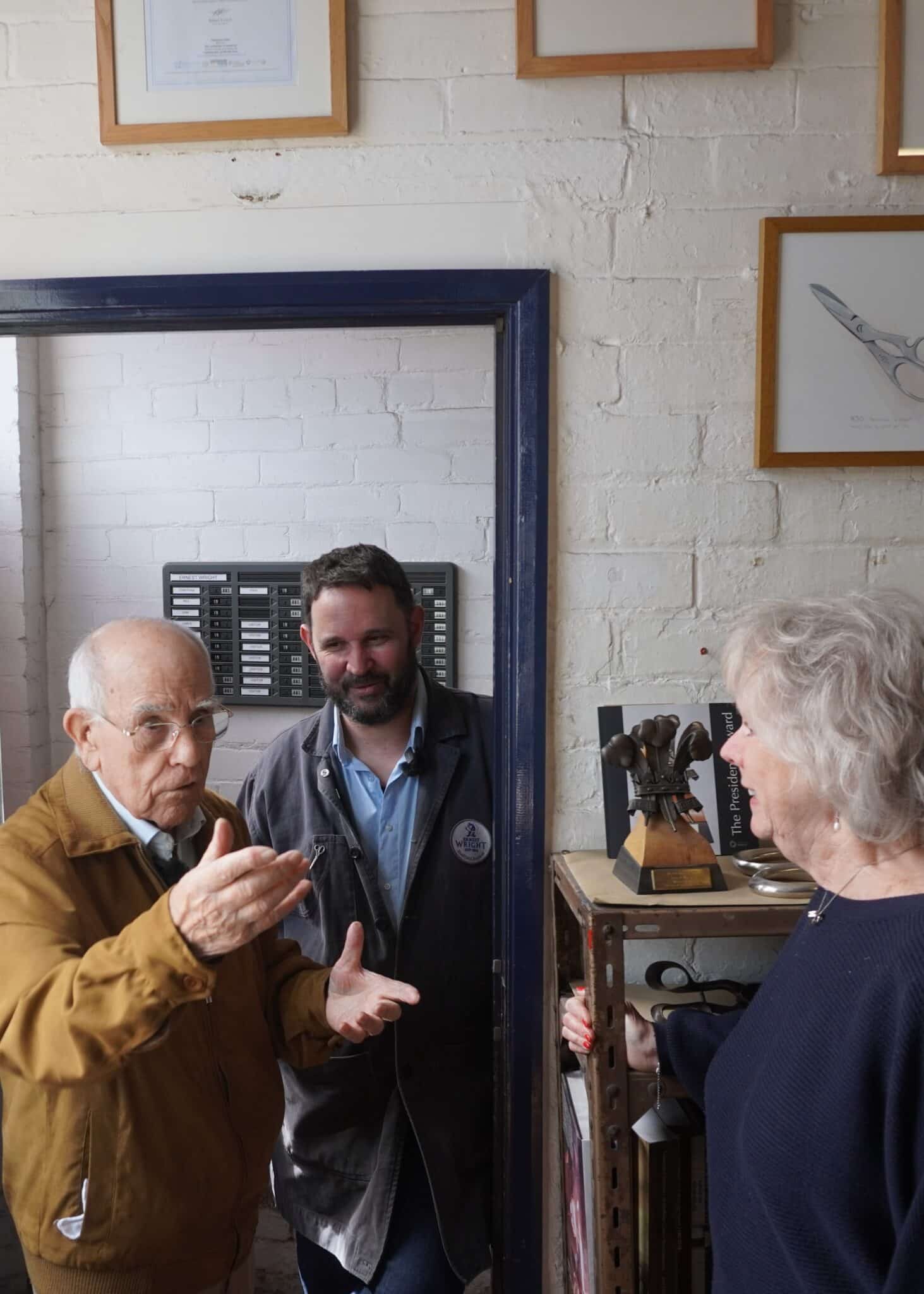
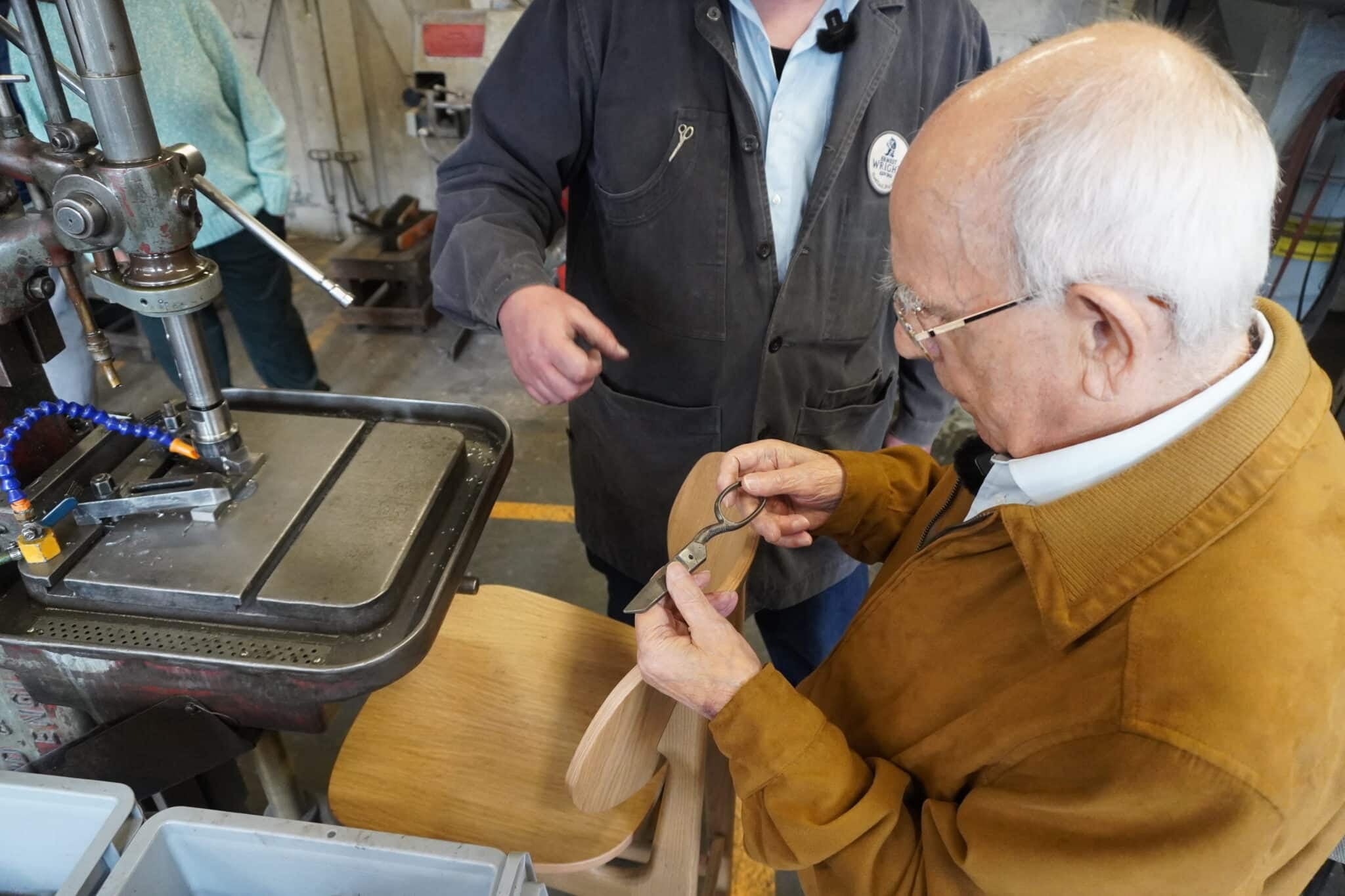
Manolo Rocca arrived at Kutrite Works on a May morning, coming not through the front entrance but through the courtyard at the rear of the building, the way the workers always have, with his neighbours at his side. He was splendidly dressed, in a Harrington jacket that a man half his age would be proud to wear, and he moved with a purpose that made it difficult to believe he had turned 95 earlier this year. Once inside, something shifted.
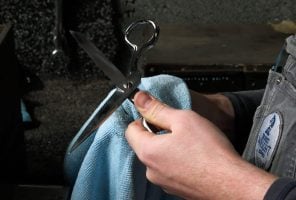
The workshop did something to him, or perhaps he did something to the workshop. Within minutes he was holding a blank, running his thumb along the edge, and telling us things about the scissor trade that no recording can fully capture. Not because the words are hard to follow, but because the knowledge behind them took a lifetime to earn.
We found ourselves thinking: I hope I am half this alive at his age.
A son of Gibraltar, a child of Sheffield
Manolo was born in Gibraltar and came to Sheffield as a young man, drawn into the scissor trade through his cousin, a borer and hardener at Ernest Wright. He had already developed a certain steel before he arrived, having studied at the College of Arts and Crafts, and represented Sheffield as a schoolboy boxer. He was disqualified at a tournament for being overweight. He still sounds mildly aggrieved about it.
He joined Ernest Wright in 1949, at eighteen. In the Sheffield scissor trade, most men had one job and one job only: a putter-togetherer did nothing but put together, a grinder did nothing but grind. Manolo moved through every station in the workshop.
“I didn’t just stick to boring and hardening,” he says. “I went into everything.”
Alright with the Wrights
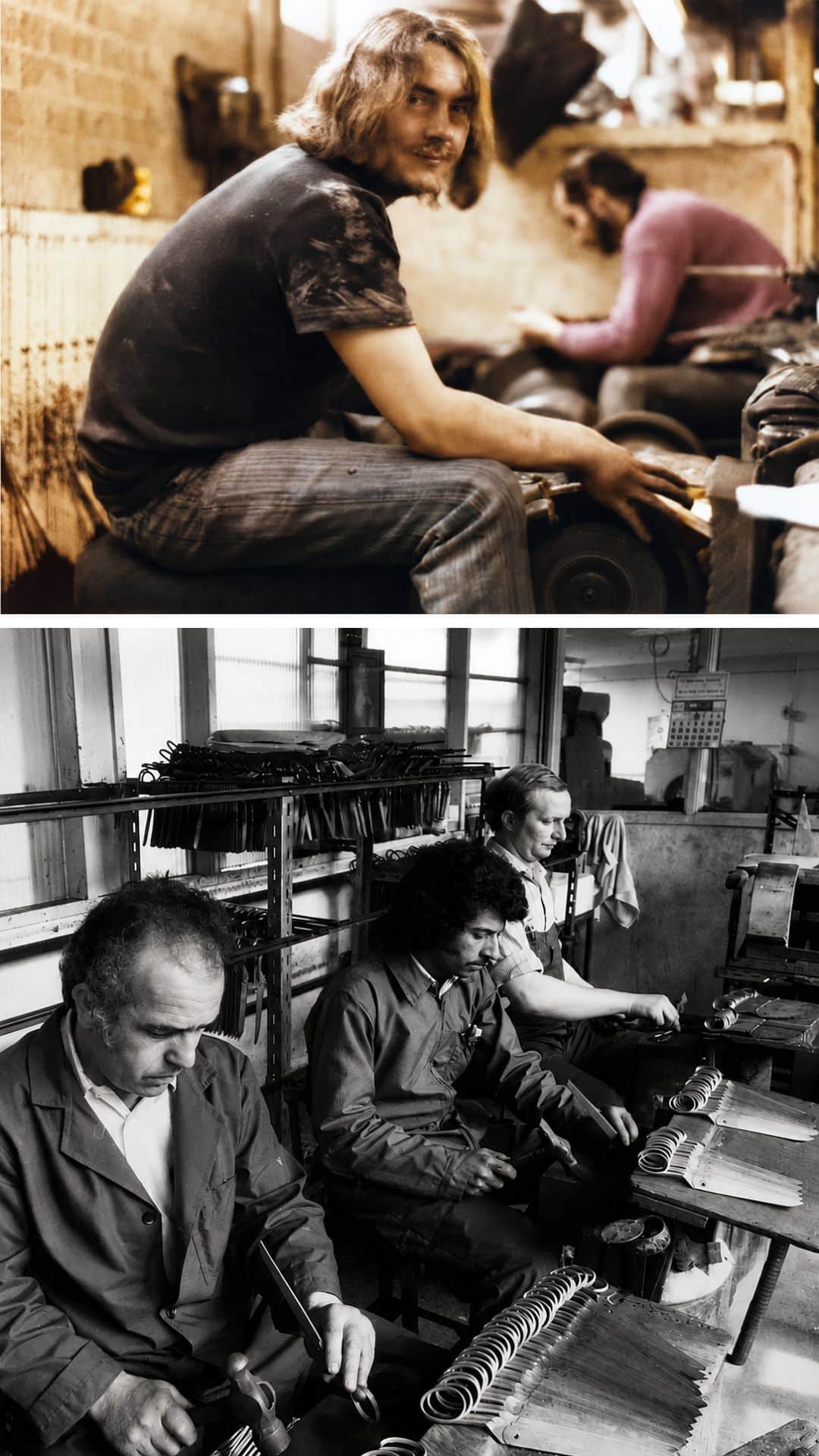
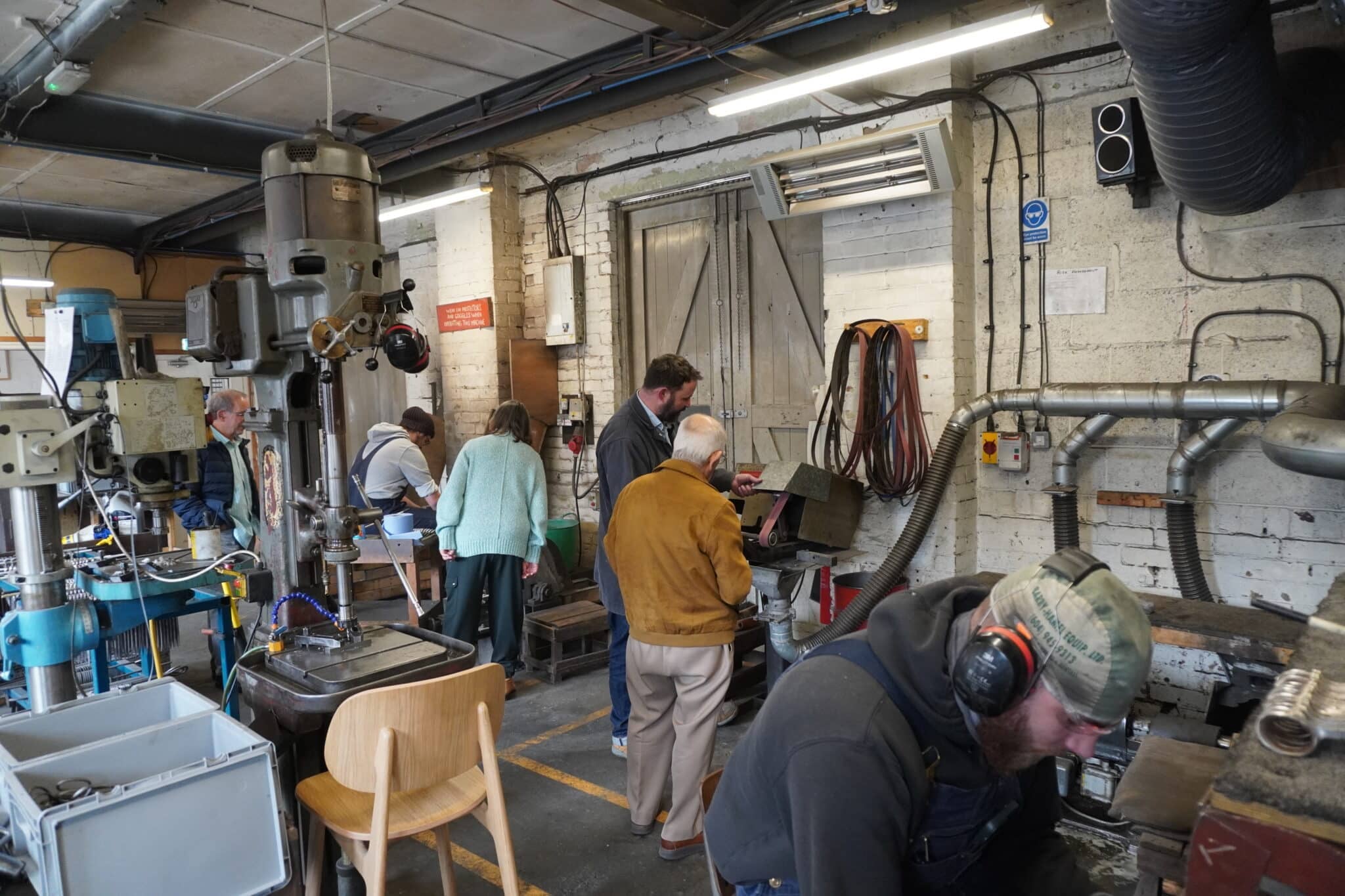
By Manolo’s own reckoning, he worked at Ernest Wright for the best part of ten years. He was in charge of the workshop, setting the machinery, keeping the blanks coming, checking the hardening. His wife, Kathleen, did the plating. He was, he tells us with quiet satisfaction, the first employee in the Sheffield scissor trade to earn a pound an hour.
Philip and Graham Wright were at the helm of the business in Manolo’s day, and he remembers them with a warmth that seven decades have done nothing to dim.
“Philip was in the office most of the time, and Graham was the man who got stuck in,” he says. “They looked after me, the Wrights, and they respected me. They made it possible for me to have an operation so I could hear, and they paid for everything. And once, when I got my hand trapped in the Viotto, it was Graham who helped me out.”
It is the kind of loyalty that runs both ways and quietly endures. Philip Wright is still alive, and Manolo hopes to see him soon. “Straight away Philip will know me,” he says, “as I will know him.” We fully intend to bring the two together again.
At one point, Manolo mentioned something that stopped us in our tracks. In the Sheffield scissor trade, a dozen was never twelve; it was fourteen. One extra for breakage, one extra to make a profit. A gross was 168, not 144. “That was in case you ruined one,” he says. “Never mind, we could make another dozen out of that extra.” We knew this detail as something referenced in rare, historic books, but it had never felt more alive than in that moment, hearing it from the man himself.
Following a dream
In 1975, Manolo and Kathleen left Sheffield for Canada, where Manolo had been asked to build a scissors-making operation from the ground up. There were no scissor makers in the whole of Canada. He answered the advertisement on a bet, went for three weeks, and they wouldn’t let him come home. He got three shifts running, day, evening and night, trained the workers, and solved the problems one by one.
Then they dismissed him, believing they could manage without him. They could not. Manolo took the employers to court and won his case.
After Canada came South Carolina, and a story that followed the same pattern. Volume mattered more than knowledge. Speed mattered more than skill. The idea was that ordinary workers could be placed in front of modern machines and the product would take care of itself. It never did. The putter-togetherer cannot be replaced by a machine, however sophisticated, because the knowledge lives in the hands and nowhere else. When Manolo left, those factories closed too. Both of them.
He came back to Sheffield. Kathleen has sadly passed away. Manolo still lives in the area, and it turns out that the scissor trade never quite left him.
Back in the workshop
It is worth saying that this was Manolo’s first visit to the current Kutrite Works. The Works he knew in his earlier Sheffield years was a different one, though it carried the same name and the same spirit.
When a retired scissor-man walks back into the workshop, you see a part of them come back to the surface.
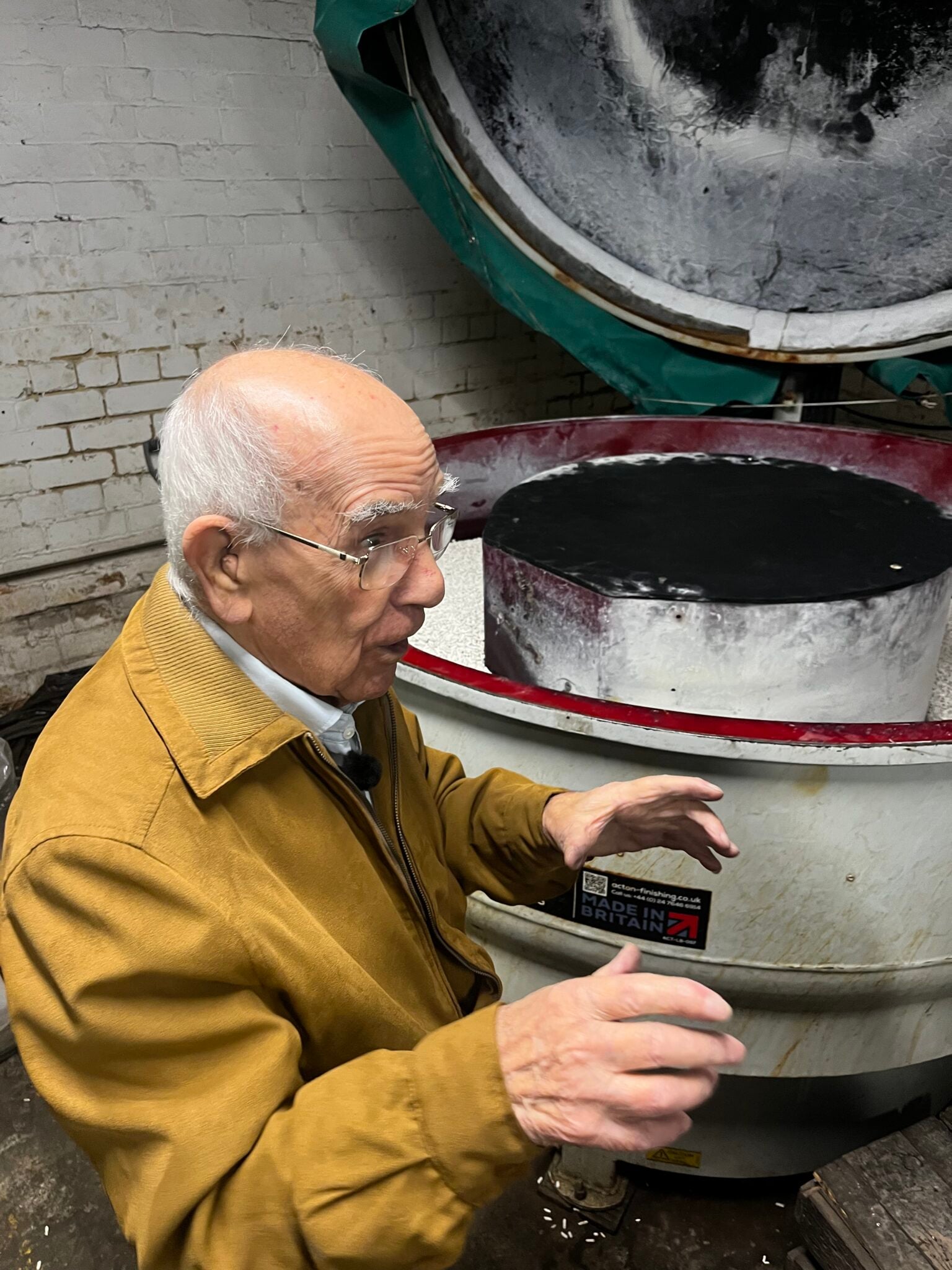
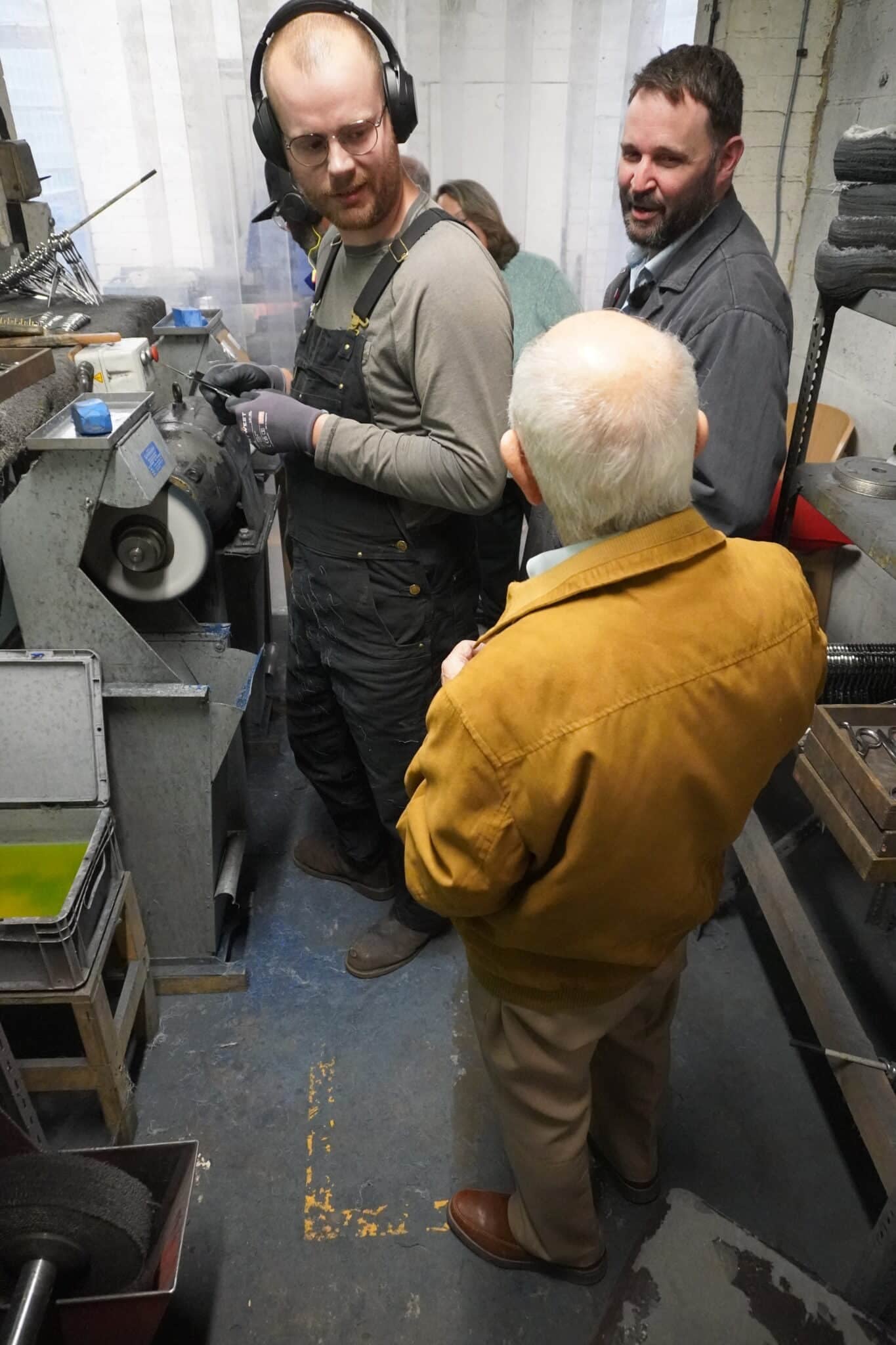
Manolo’s eyes shone as he watched Sam, our master putter, marrying blanks into pairs of scissors at the putter’s bench. “A putter-togetherer has to get that feeling for the scissors,” he said. “An ordinary person will get them too tight or not tight enough. A putter-togetherer has to know how to make it feel good.” He spotted James working on the saddle grinder and paused. “The guy that used to be grinder looked a bit like him,” he said, “but of course it can’t be him because of his age.” He smiled at that. The trade goes on. The faces change. The work is the same.
The inside bow grinder was a different matter. It is a machine specific to the scissor trade, often made to order, sometimes made by the craftsman himself. Manolo once built one. He looked at ours for a moment and said he wasn’t sure he felt comfortable with it. We started the motor anyway. Within seconds, something shifted. His hands found the machine, the grip, the angle, the pressure, all of it still there. Seventy-five years, and the knowledge was exactly where he left it.
“Not bad,” he said. “I haven’t done that in 20 years.”
We took him upstairs, where old machines, spare parts and our stock of blanks are stored. Among them, the worn out saddles of the grinders. He stopped and ran his hand along one. “They don’t make these anymore,” he said.
He was right. And wrong. Recently Robin Wood made two new saddles for us, the old way, because there is no other way.
Present day
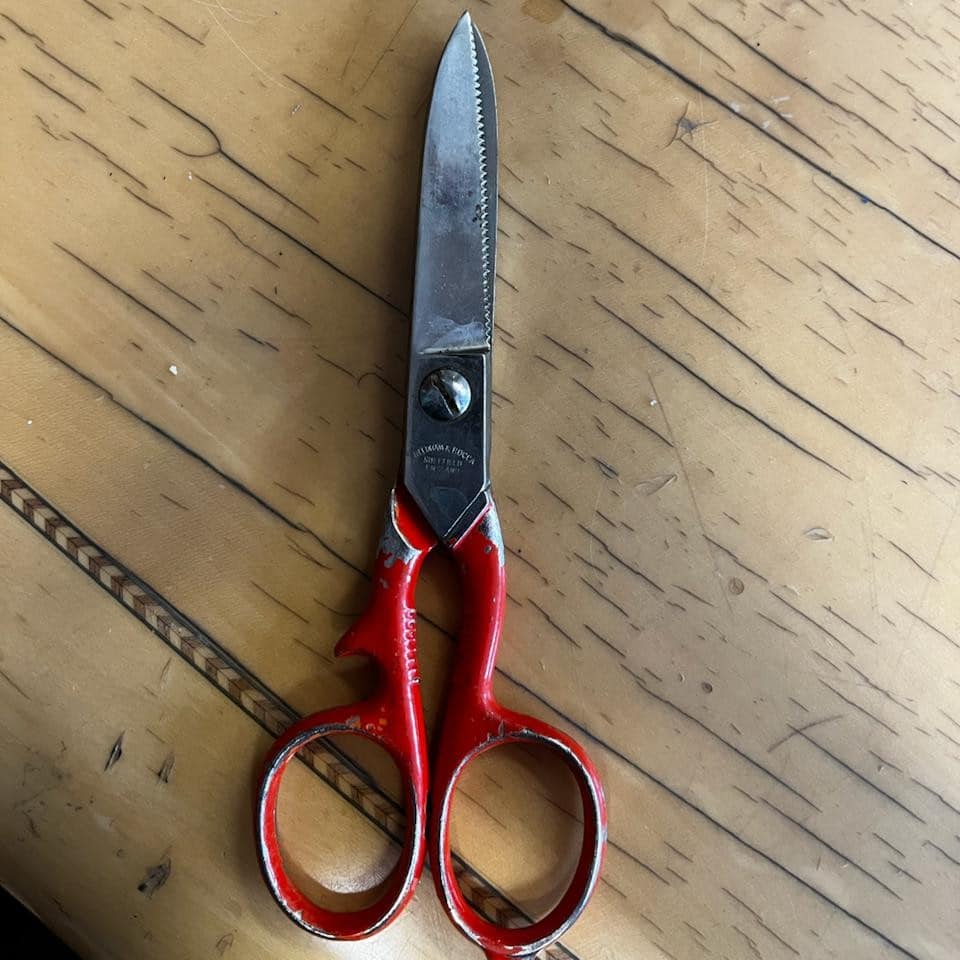
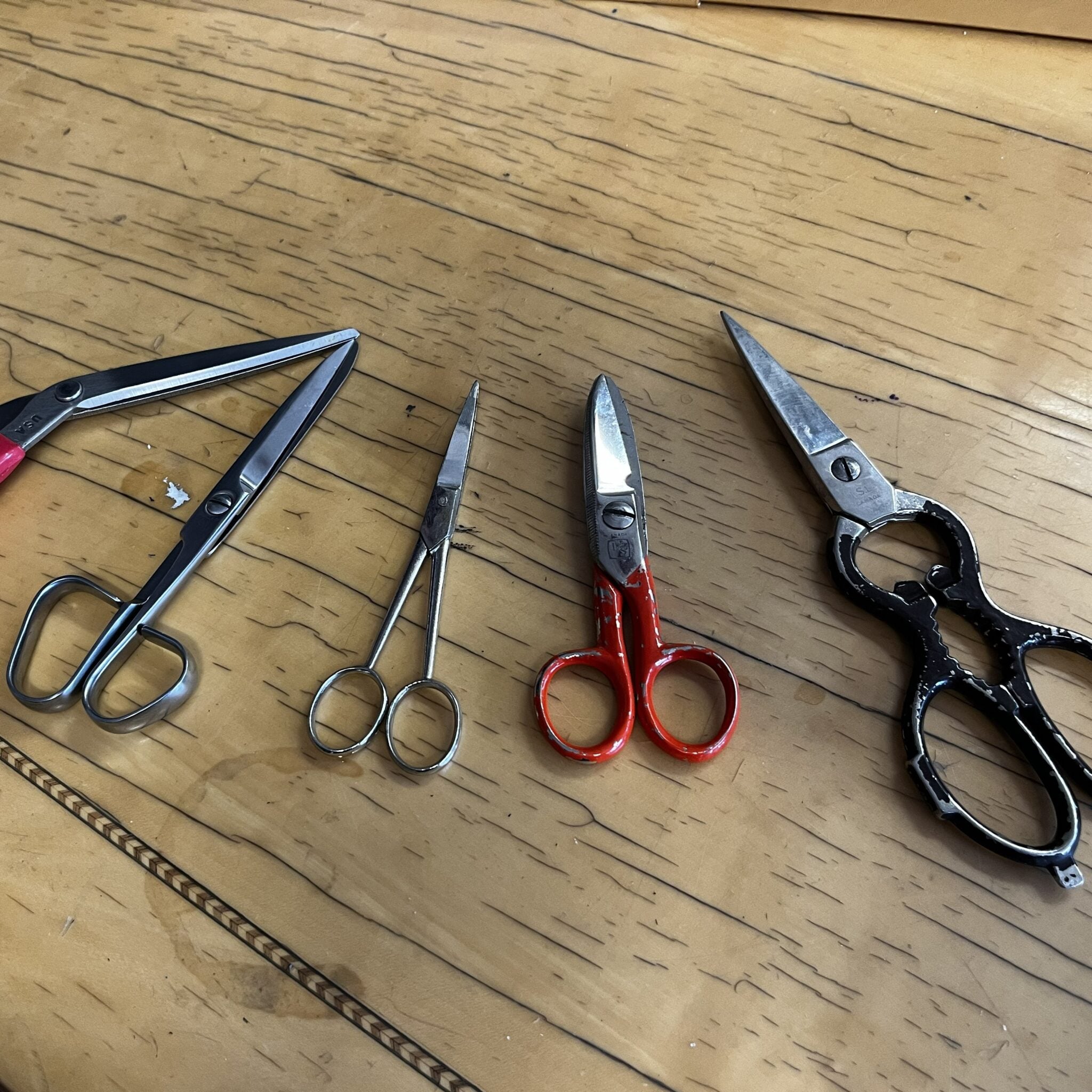
It was very special to see Manolo holding the scissors made here at Ernest Wright in 2026, eight decades on from his beginnings in the trade. He turned a pair over slowly in his hands, feeling the balance and the weight of them, the way a craftsman does when he is listening to what an object has to say.
“What you’re making now is a better quality thing,” he said. “The stainless steel feels comfortable. I’m against doing away with these things.”
“It’s all very interesting, and I’ve always been interested in scissors,” he said. “Unfortunately, I don’t get younger, you know. I get older all the time. Funny that, isn’t it?”
He looked around the workshop one last time, at the machines and the blanks and the people who still know what to do with them.
“Good old days! Fantastic,” he beamed.
Watch Mr. Rocca on the inside bow grinder and on the putters bench on YouTube.