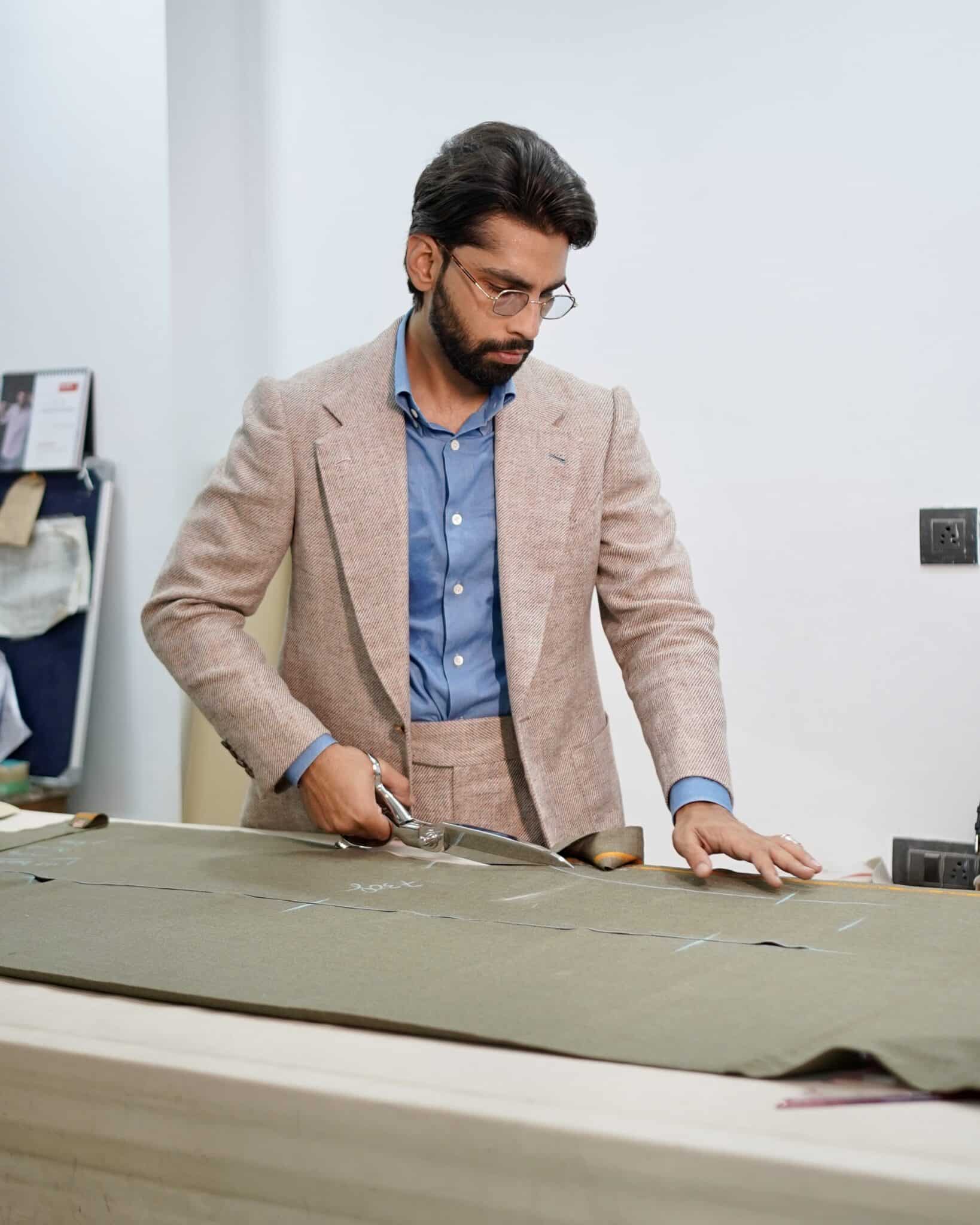
A singular vision may travel far and wide before it fully flourishes. For Aditya Jain, Creative Director of Indian Tailoring Company, the seed of inspiration emerged from a son’s admiration, travelled around the globe to tailoring academies in Milan and on Savile Row, was nurtured by the master tailor Andrew Ramroop OBE, and finally took root on home soil in Delhi.
“My father was in the textile business, and I used to see him get dressed in the morning, always in properly fitting suits,” Jain told Ernest Wright over video call, elegantly attired in his own suiting. “Even my grandfather was like that in his own way; he used to dress up properly.”
By high school, Jain had determined to become a tailor. “Having a mind inclined towards handcraft, I was drawn towards fine, bespoke tailoring in particular,” he says. “Working with my hands has always been a kind of therapy for my mind.”
The elegant cuts, heritage fabrics and gentlemanly principles woven through Jain’s work would be enough to set a menswear tailor apart. But it is the interpretation of these fundamentals through an international, eclecticist, internet-savvy lens that makes Indian Tailor Company all the more exceptional.
Fresh from Delhi
Look up Indian bespoke tailoring on Instagram, or another online platform of your choice, and you will discover a generation of tailors who blend global influences with fine craftsmanship in ways that often feel, and certainly look, fresh.
“With the new age of globalisation and social media, a lot of people who were already inclined towards good fashion are now introduced to what bespoke really is,” says Jain. “For me, this has made South Asia the new upcoming region to promote my bespoke tailoring.”
Back in college, Jain wrote his dissertation on the feasibility of bespoke tailoring in India. The business plan for Indian Tailoring Company had begun to crystallise long before he set up shop in Delhi’s Shankar Market.
“My key idea was to promote handcraft, to create a different USP and become a legacy brand,” he says. “I wanted to present the brand as an artist, not a fashion label, so whenever you buy suits from me, you are buying a piece of art. It’s not fast fashion; it’s something you keep in your wardrobe for a long time. You let it age gracefully.”
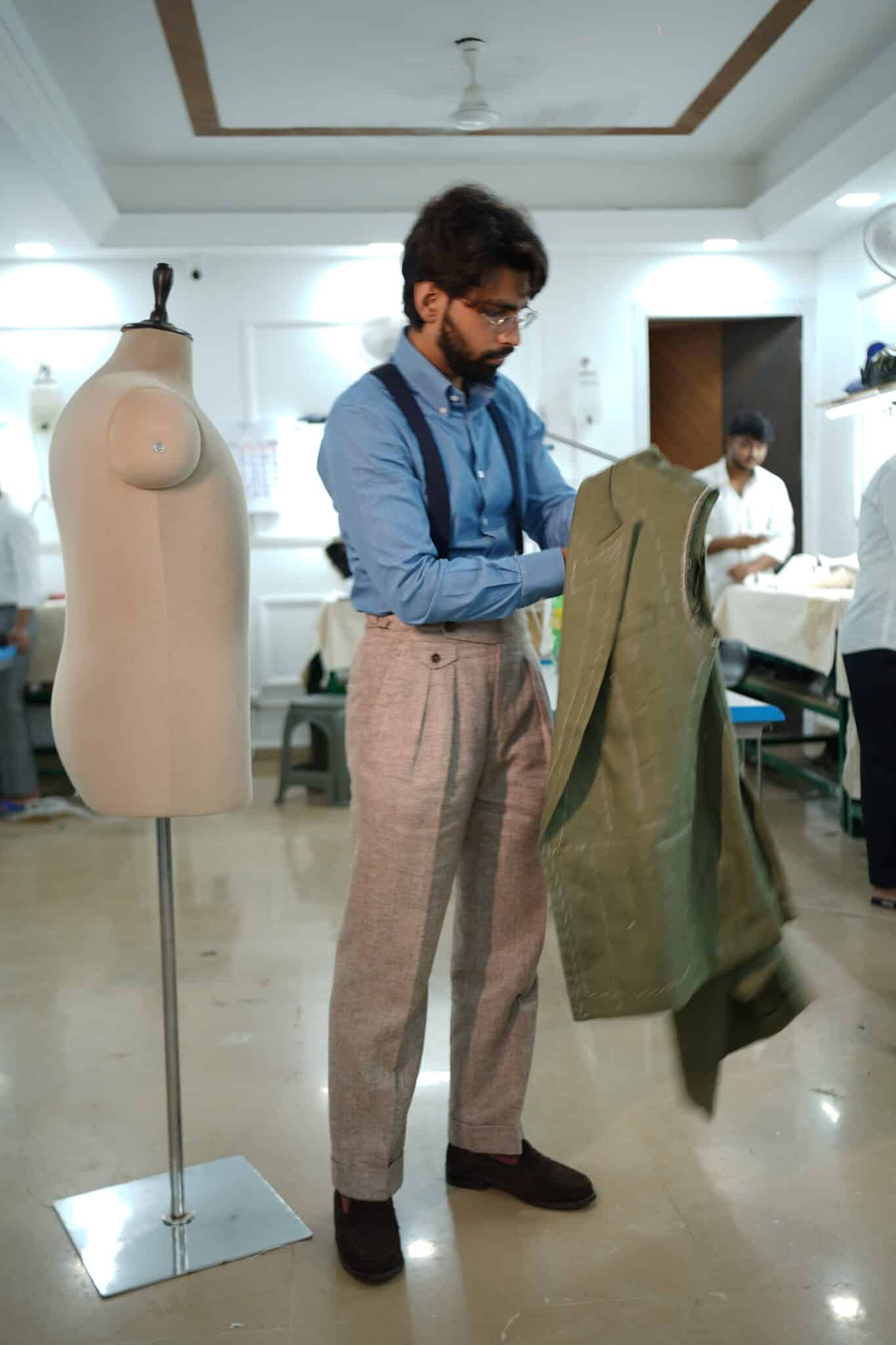
Fashion without boundaries
Delhi has long been a fashion hub, from the Mughal Era (1526 – 1857), when the city was the epicentre of textile-making and embroidery, to the 1960s, when Ritu Kumar, one of India’s most celebrated designers, studied at a Delhi college. It has been an epic story of reinventions, and Jain is seeking to write a new chapter.
“I belong to Delhi – my roots are here, and so is my family business,” he says. “If you think about the day-to-day Indian style that’s worn here, it is very traditional. We tend to wear long jackets, which we call sherwanis, and long shirts called kurtas.
“Not everyone needs to dress like this on a daily basis, and because of the boom in social media and globalisation, fashion has forgotten its geographical boundaries – it has reached every corner of the world,” says Jain.
In the tailoring shop and on the streets of Delhi, this global flow of fashions manifests itself in extraordinary pieces.
“One client of mine wears a particular style all the time, called a bandhgala suit, which is a formal Indian suit with a closed neck,” says Jain.
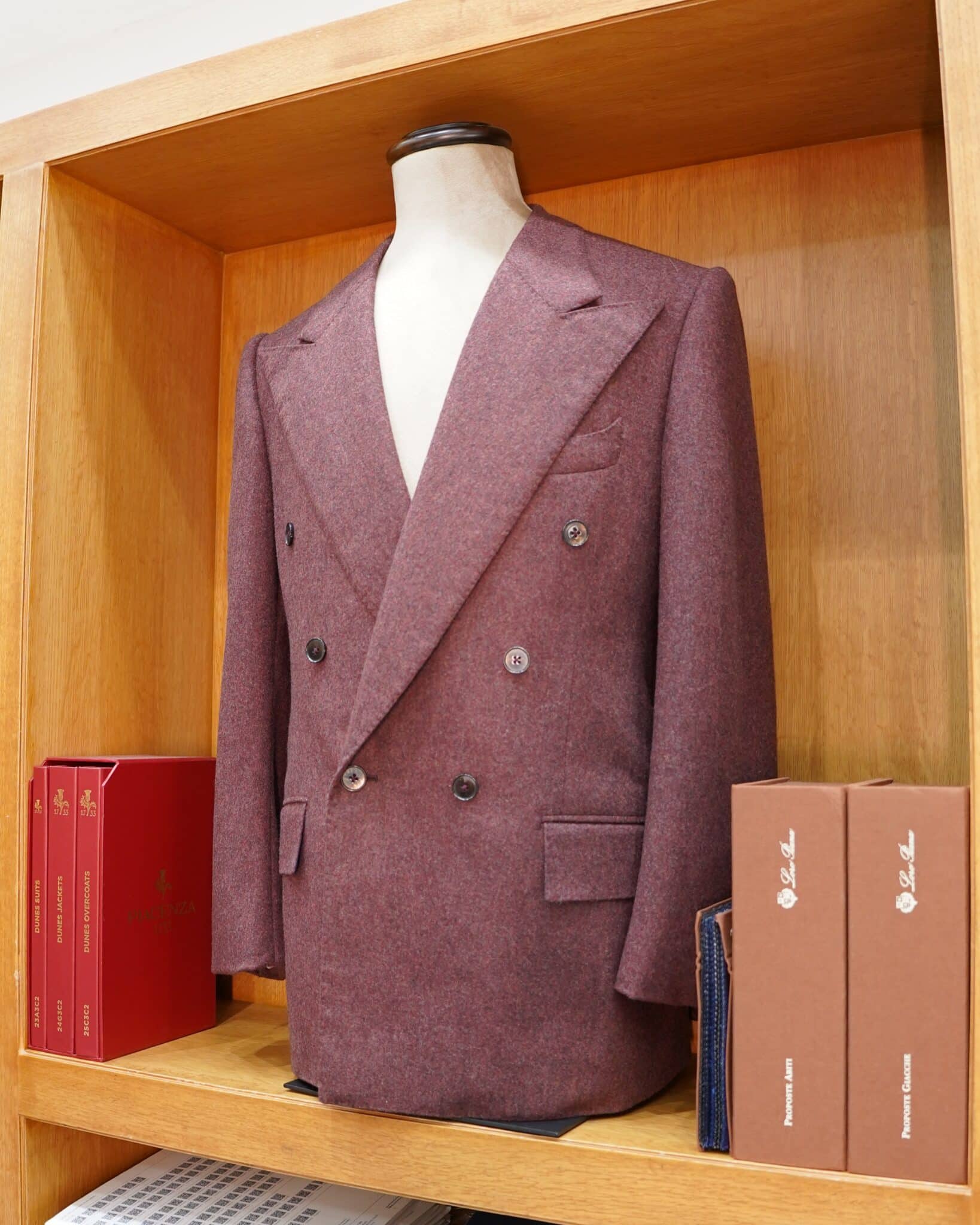
“Traditionally it is made with a structure inside which gives weight to the jacket, but for him we made a completely unstructured jacket cut on a Savile Row pattern, made in a blend with Korean and Italian techniques. The jacket feels weightless and breathable, perfect for summers in Delhi and for travels. It’s a global product for a global traveller.
“Then there was a very interesting geometric oxymoron jacket I made for another client in Maison Hellard linen denim, with curved jetted pockets and delta lapels,” he continues.
“People who like wearing a layer on top of their shirts have also started adding ‘shackets’ to their wardrobe, to break that everyday monotony of wearing a suit.”
Remote bespoke
The relationship between a snappy dresser and their tailor is for life, and this ideal underpins Jain’s service at Indian Tailoring Company.
“I’m less interested in the number of new customers than with the amount of work from existing customers,” he says. “Once we’ve got their fit, they order repeatedly, and in the end I plan their entire wardrobe for the year.”
While many of Jain’s bespoke pieces have graced the streets of Delhi, you don’t necessarily need to visit Shankar Market in order for him to attire you.
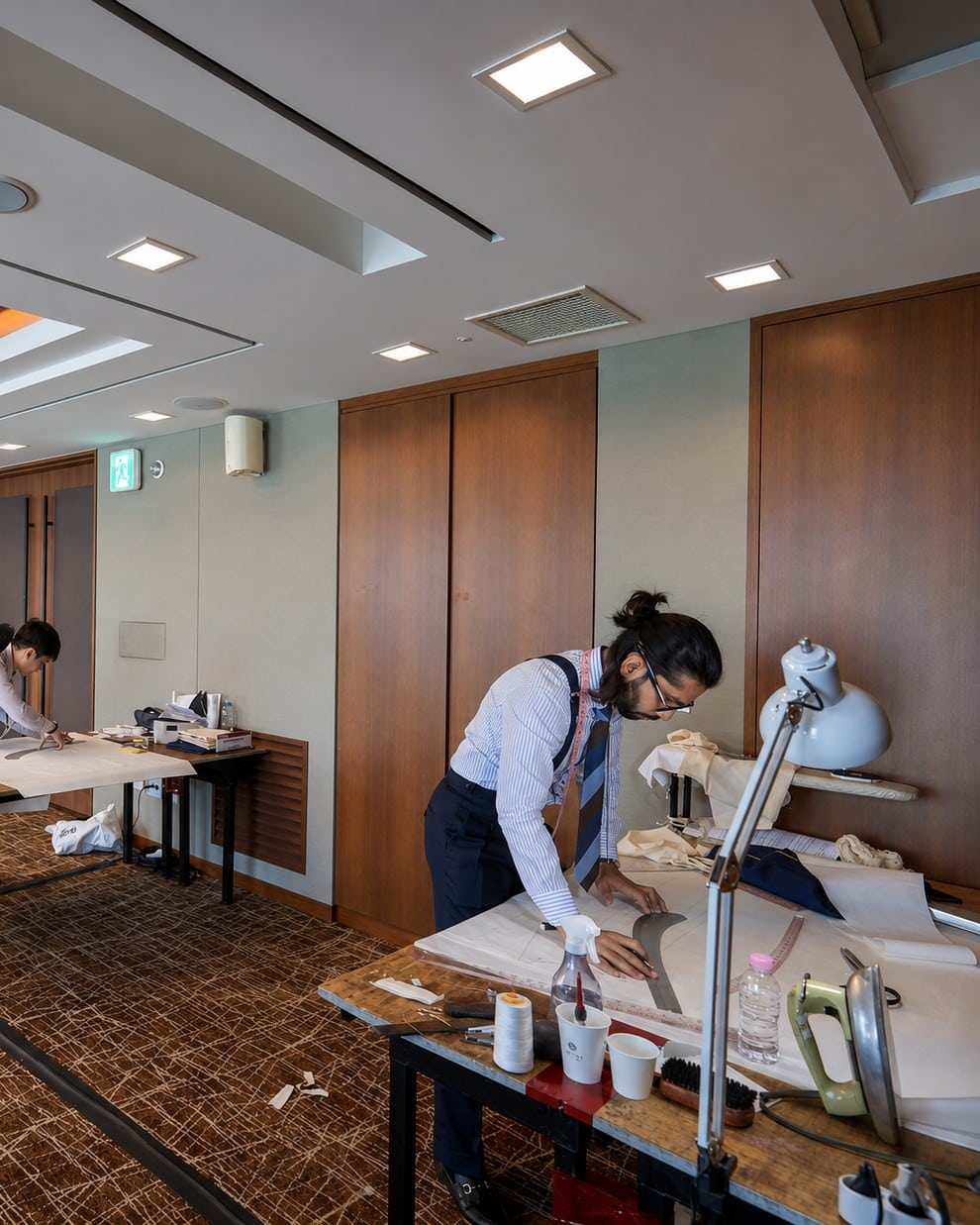
“I have been making suits for people in the U.S., the UK, Japan, and Dubai,” he says. “This is what I call ‘remote bespoke’. A gentleman might have seen a product that he likes through Instagram, and he is willing to try a remote fitting, because he is very particular about his clothing and he wants to experiment.
“So, we fix a time for a video call, and I direct them on how to take their measurements, so that I can make a trial garment and ship it to them. Then we take fittings over video call again, and start working with the final fabric. This is how I’m able to send my products all over the globe.”
Style for all seasons
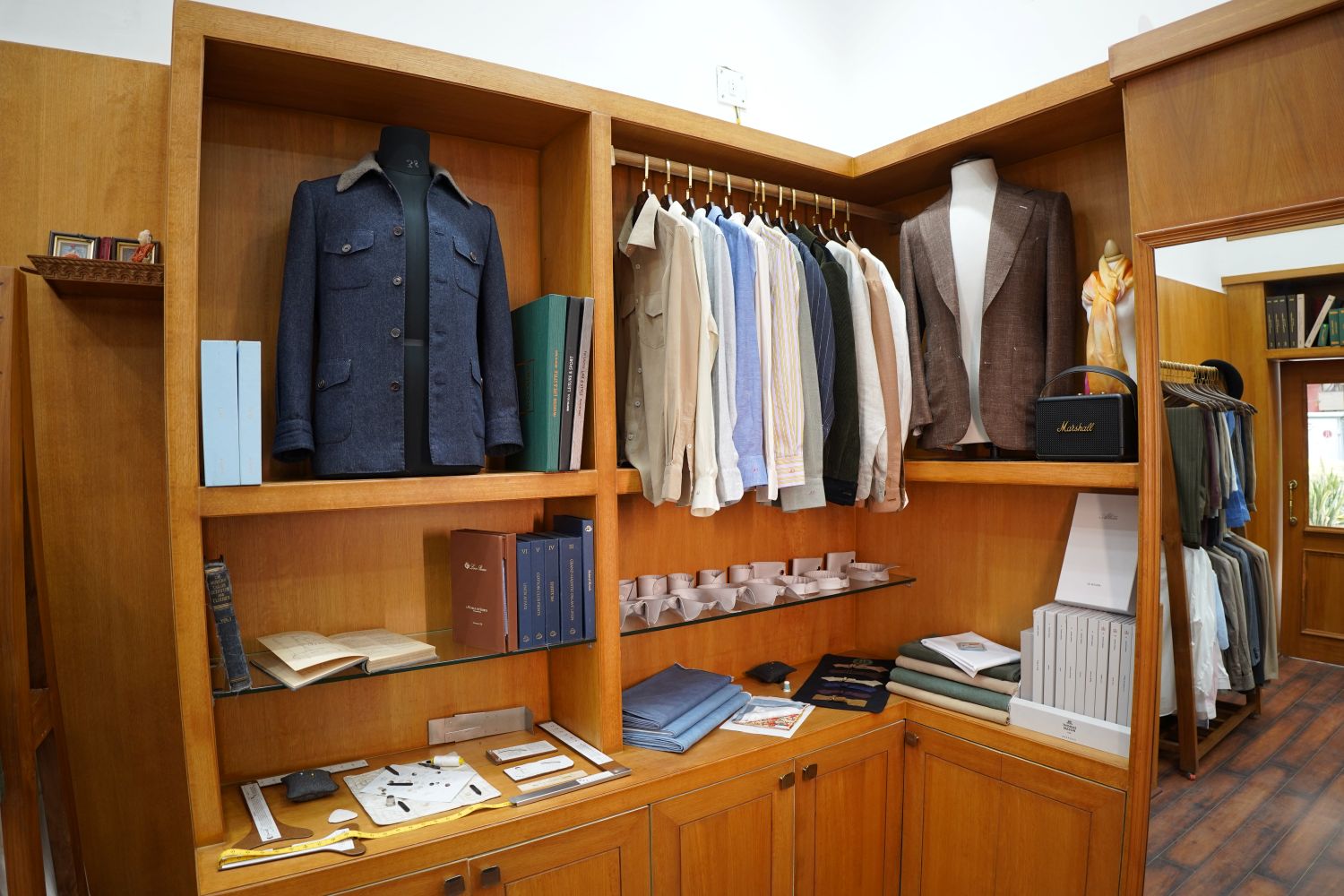
Delhi’s weather is more varied than some Europeans might imagine, and this has equipped Jain well to craft clothing for all climates. “For around three months of winter the temperature can get down to 2 or 3 degrees, and we wear good winter clothing at that time,” he says.
“Around the rest of the year it’s all summer weather, so we try to use cashmere-silk blends, cashmere-linen blends, and then for winter we also make overcoats in cashmere.
“It all depends on the customer’s choice,” he adds. “We try to give him a versatile wardrobe by suggesting him a travel jacket that’s crease resistant, a water-repellent jacket made with Loro Piana storm system fabric, and so on.”
A cut above
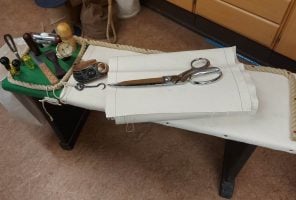
When Jain was a trainee tailor at Savile Row Academy, he wasn’t satisfied with the shears provided through the course.
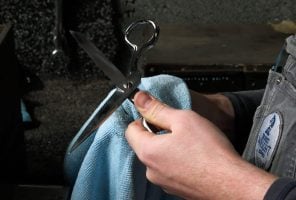
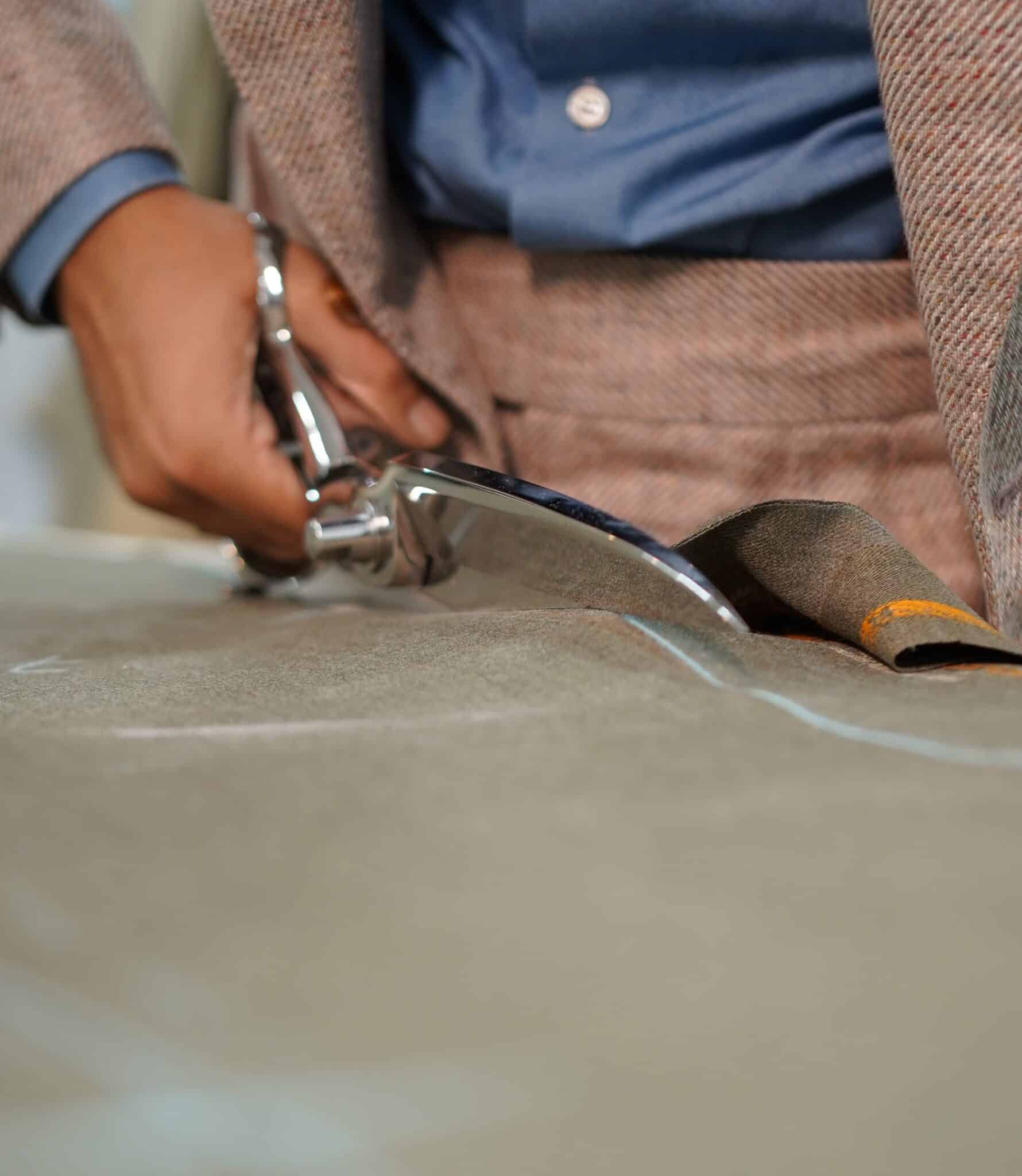
“I was Googling around for another option, and I saw Ernest Wright’s 13″ Heritage Tailor Shears, for which you had to wait for a proper period of time,” he says. “I decided they would be perfect for me because I want some weight in my hand. I think you have to be a tailor to appreciate that. It’s like buying the Rolls-Royce or Patek Philippe of shears.”
Jain’s Heritage Tailor Shears arrived around a year ago, making him one of the first craftspeople to own this pattern. It is a great satisfaction for us to see the work that they help him to accomplish.
India’s gift
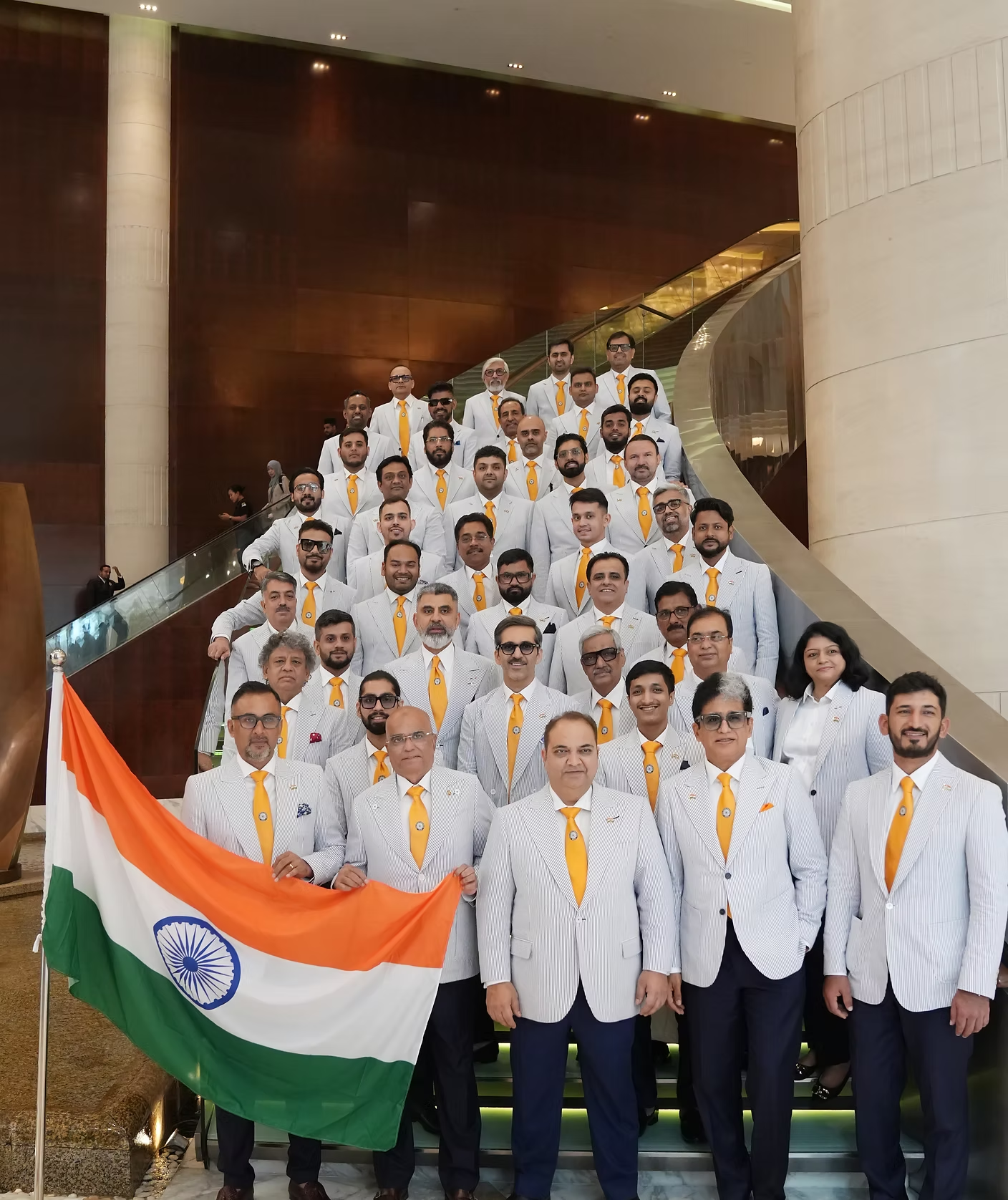
Jain’s vision and mastery have not gone unnoticed. As of 2025, he has been called upon by the Master Tailors Association of India to serve as Technical Advisor. The role sees Jain sharing his knowledge with fellow tailors at meetings and seminars, enriching his trade in the process.
“Until recently there was no teacher providing tailoring tuition in our country, and the other masters were so afraid of teaching their craft to others that they would run away from the prospect of doing so,” says Jain.
“It was a very closed society, but there was then an incorporation of good people to form the MTA. I joined along with other young tailors, and I then got an opportunity to represent my country at the World Federation of Master Tailors.”
The MTA aims to provide a platform for Indian craftsmanship to be recognised and celebrated globally, combining tradition with innovation. Jain and his associates are also eager to equip talented young craftspeople for the future, having lived through a lull in Indian tailoring either side of the Millennium.
“There was a gap during our parents’ generation when there were no new tailors,” says Jain, “but now there’s this entire new wave of young tailors getting trained and coming into the field.
“I am 30 years old right now, and my three apprentices all turn 19 this year,” he says. “As my professor used to tell me, the best investment you’re going to make is when you invest in your people.”
Jain has discovered one of the benefits of pursuing a grand idea, from childhood dreams to taste-making mastery. Once you realise the vision, you earn the joy of sharing it.
To follow the work of Indian Tailoring Company visit Aditya Jain on Instagram.