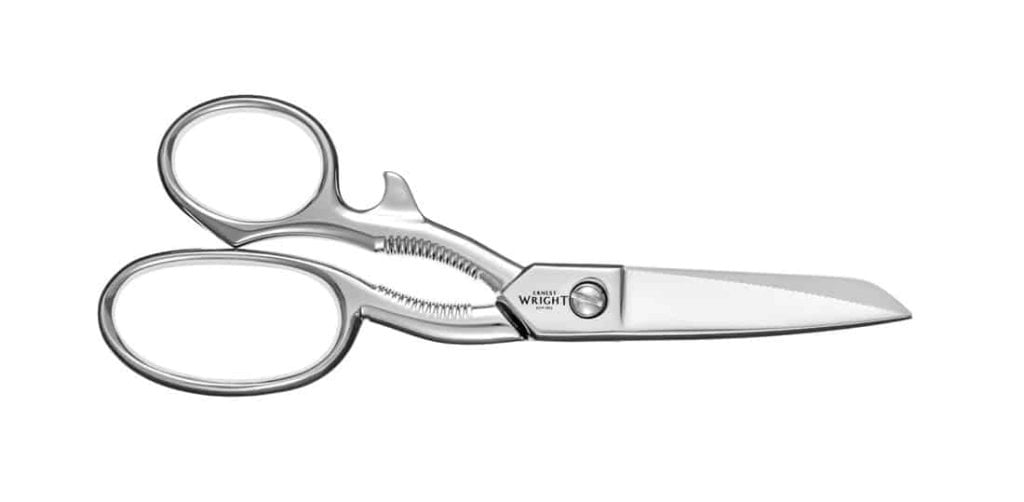
Turton left-handed
Kitchen
A true left-handed version of the Frank Turton classic kitchen scissors.

For generations, most scissors have been made for right-handed people. Many left-handed users simply learned to adapt, often without realising there was another way.
A true left-handed scissor is not simply a right-handed pair with reversed handles. It is made as its own pattern, with the blades arranged specifically for the left hand. The difference is immediately noticeable: the cutting line remains visible, the blades work with the natural pressure of the hand rather than against it, and cutting becomes more controlled and comfortable.
At Ernest Wright, we continue to make true left-handed scissors in Sheffield. Each pair is made the same traditional way as our right-handed models. Although demand is much smaller and production is more complex, we believe left-handed users deserve a proper tool, not a compromise.
Kitchen
A true left-handed version of the Frank Turton classic kitchen scissors.
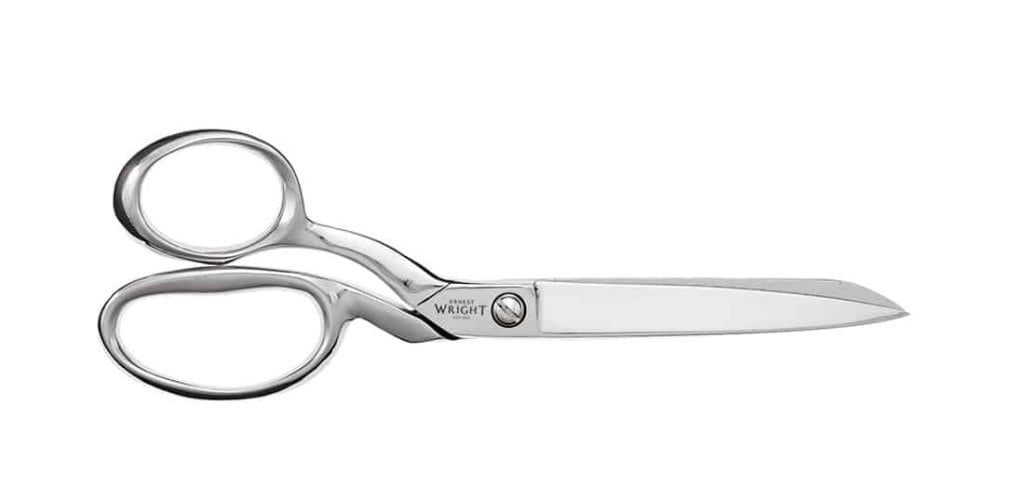
Dressmaker
Truly left-handed for dressmaking, alterations and light fabrics.
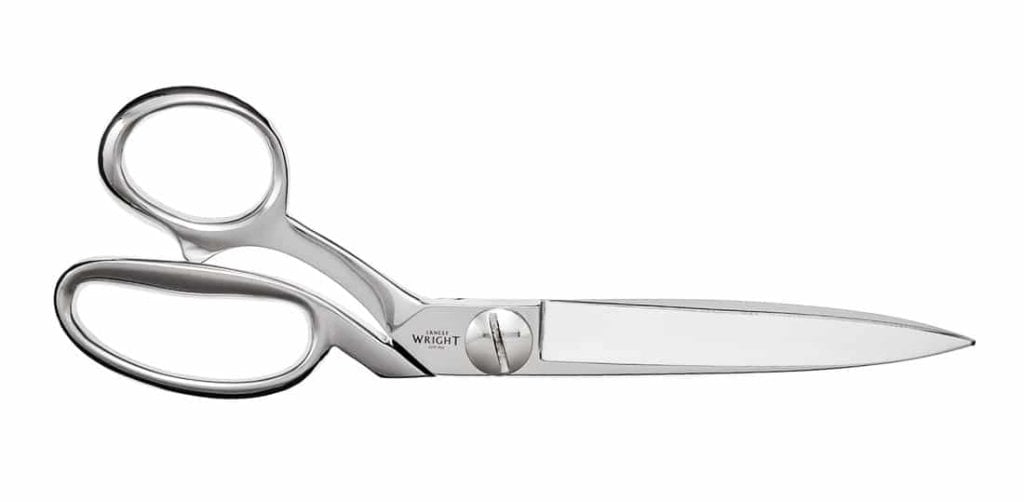
Dressmaker
Truly left-handed shears for tailoring, upholstery and leather.
Many scissors sold as left-handed are simply right-handed scissors with the handles reversed. They may feel more comfortable to hold, but the blades remain arranged for a right-handed user.
A true left-handed scissor is different. The blades themselves are reversed, allowing the natural pressure of the left hand to keep the cutting edges together rather than forcing them apart. The result is a cleaner cut, a clear view of the cutting line, and a tool that works with the hand rather than against it.
The difference is usually noticed immediately. Cutting requires less effort, the blades remain in contact throughout the cut, and the cutting line stays clearly visible. There is no need for the awkward grip that many left-handed people have developed over years of using right-handed scissors, often without even realising it.
Here, we explain the difference in a short video.
What’s the Difference Between Right-Handed and Left-Handed Scissors?
A true left-handed scissor is a pattern in its own right, not simply a mirror image of a right-handed one.
Each model requires its own forging dies, blade geometry and dedicated tooling. Every stage of production is carried out specifically for the left hand, ensuring the finished scissors perform exactly as intended.
For a small workshop, that means maintaining two complete patterns instead of one. More tooling. More time. Much smaller production runs.
There are no shortcuts to making a true left-handed scissor.
True left-handed scissors cost us more to produce. Smaller production runs, separate tooling and additional stock all increase the cost.
Even so, every left-handed model in our collection is priced exactly the same as its right-handed equivalent.
We believe a proper tool should fit the hand that uses it. That is why we make every left-handed model as a true left-handed pattern, and why we have never charged more for it because someone happens to be left-handed.
It is how we believe scissors should be made.
Around one in ten people is naturally left-handed. For manufacturers, that means separate tooling to design and maintain, smaller production batches, and stock that moves far more slowly than right-handed models.
Some manufacturers respond by reversing the handles of an existing right-handed scissor and describing it as left-handed. Developing a genuine left-handed pattern requires a much greater investment and a long-term commitment.
Today, relatively few manufacturers continue to produce true left-handed scissors, particularly specialist patterns such as dressmaker’s and tailor’s shears.
Around 10% of the world’s population is naturally left-handed. Fewer than 1% are truly ambidextrous.
Many left-handed people become remarkably skilled with their right hand, not because they were born that way, but because they have spent a lifetime adapting to tools designed for someone else. School scissors, kitchen scissors and countless everyday objects have quietly taught generations of left-handed people to compensate.
Many eventually describe themselves as ambidextrous when, in reality, they have simply become highly skilled at adapting.
For many, using a true left-handed scissor is not about learning something new. It is about discovering how scissors were always meant to feel.
For someone who has used right-handed scissors for decades, a true left-handed pair can feel unfamiliar at first. That is perfectly natural. The muscles and movements developed over many years need a little time to adjust to a tool that finally works with the hand instead of against it.
For many people, that adjustment takes around two to three weeks. Once new muscle memory develops, cutting becomes more relaxed, more precise and considerably more natural.
Many of our customers tell us they would never willingly return to a right-handed pair.
The blades of a pair of scissors are designed to work under pressure. When a right-handed person closes a right-handed pair, the natural movement of the hand presses the blades together, allowing them to shear cleanly.
When that same pair is used in the left hand, the pressure is reversed. Instead of bringing the blades together, it encourages them to separate slightly. The result is familiar to many left-handed users: folded paper, fabric that snags, and cuts that require more force than they should.
A true left-handed scissor reverses the blade orientation so the natural pressure of the left hand once again keeps the cutting edges together. The cutting line also remains visible, giving greater control and accuracy throughout the cut.
Not every scissor in the collection follows this rule in the same way. Our Thread Snips and the Nurseryman are made without bows, the shaped finger loops found on a conventional handle.
Without a bow to direct the grip, the hand’s squeezing action does not place the blades under the same directional tension as it would with a bowed pair. As a result, these scissors can be used comfortably in either hand, even though the blades themselves carry a right-handed orientation.
Producing true left-handed scissors has never been the easy option.
Every left-handed pattern requires its own forging dies and dedicated tooling. Production runs are smaller, demand is naturally lower, and manufacturing costs are higher.
It would be easier to make only right-handed scissors, or simply reverse the handles and describe them as left-handed.
We have chosen not to.
A proper tool should work for the person using it. Being left-handed should never mean accepting a compromise, nor should it mean paying more for a tool designed for your own hand.
It is simply the choice we continue to make.
About Ernest Wright
Made in
Sheffield
A Sheffield trade,
still practised

Ernest Wright
(1880–1954)
World of
craftsmanship
Buy once,
love forever